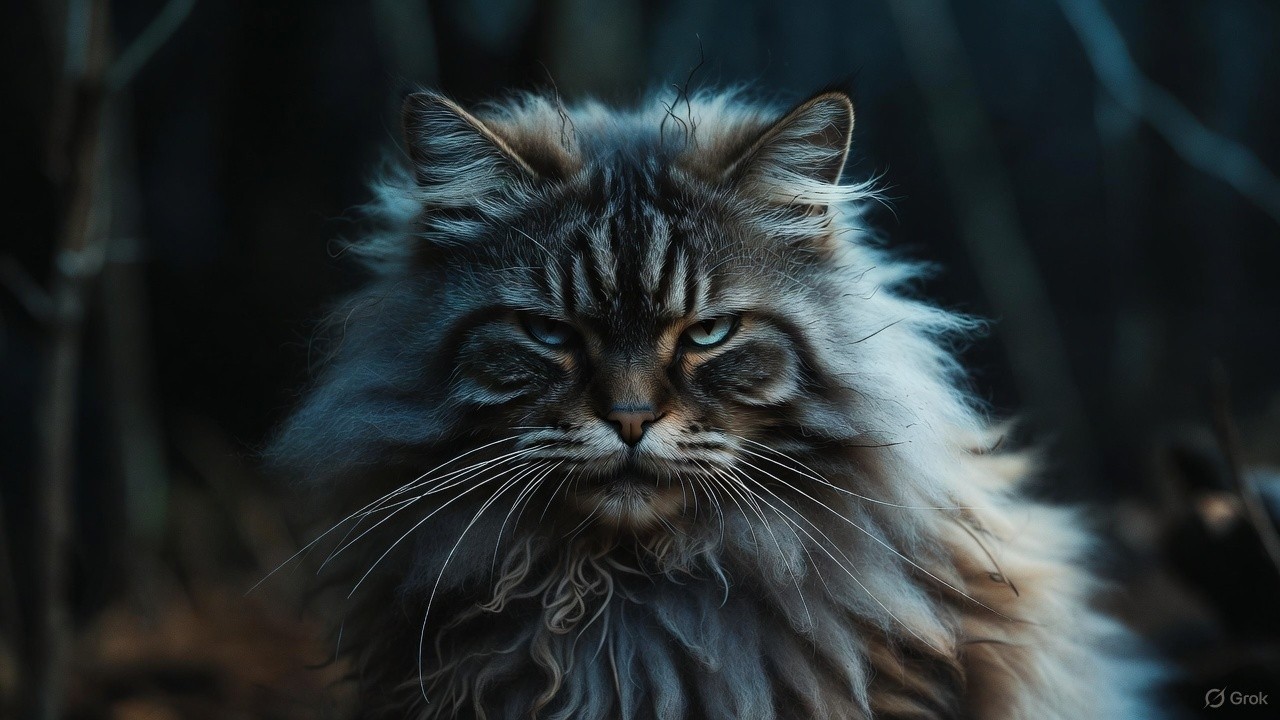
化け猫
公開 2025/12/11 21:56
最終更新
2026/01/24 17:36


「猫にまつわる妖怪の話し。10年以上生きると化け猫、20年以上生きると猫又、30年以上生きると猫魈(ねこしょう)になると言われるが、ペットの寿命が延びた現代、世の中は化け猫だらけになっているはずだ。恐らく猫又も少なくないだろう。流石に猫魈はいないだろうな」。#化け猫 #猫又 #猫魈 #猫の妖怪
"Tales of supernatural cats. It's said that cats living over ten years become bakeneko, over twenty years become nekomata, and over thirty years become neko-shō. But with pets living longer these days, the world should be swarming with bakeneko. Probably quite a few nekomata too. Though I doubt there are any neko-shō".
The post humorously applies Japanese folklore to modern pet ownership, noting that cats living over 10 years become bakeneko (shape-shifting yokai), over 20 become nekomata (two-tailed variants), and over 30 become rare neko shō, implying today's world teems with the first two due to extended lifespans.
In folklore, bakeneko emerge from long-lived cats gaining supernatural powers like fire-starting or impersonation, while nekomata represent an advanced, vengeful form with forked tails; neko shō appears in lesser-known tales as an even elder spirit, though sources vary on exact thresholds.
Indoor domestic cats now average 12-18 years, with many reaching 20+, per veterinary data from PetMD and Blue Cross—supporting the post's jest that urban Japan likely harbors countless "yokai" disguised as pets.
この投稿は日本の民間伝承を現代のペット飼育にユーモラスに応用し、10年以上生きる猫は化け猫(変身する妖怪)、20年以上は猫又(二尾の変種)、30年以上は稀な猫魈になると指摘。寿命の延長により現代社会には前2種が溢れていると示唆している。
民間伝承では、長寿の猫が火を操る能力や変身能力などの超自然的な力を得て化け猫となり、二尾の尾を持つ復讐心のある進化形が猫又である。猫魈はより古い精霊としてあまり知られていない物語に登場するが、正確な境界線については資料によって異なる。
ペットMDやブルークロスの獣医学データによれば、現代の室内飼い猫の平均寿命は12~18年、20歳を超える個体も多く、この投稿が冗談交じりに指摘した「日本の都市部にはペットに化けた無数の妖怪が潜んでいる」という見解を裏付けている。